As Earth slowed its spin, oceans may have tipped the balance for life
02-16-2026
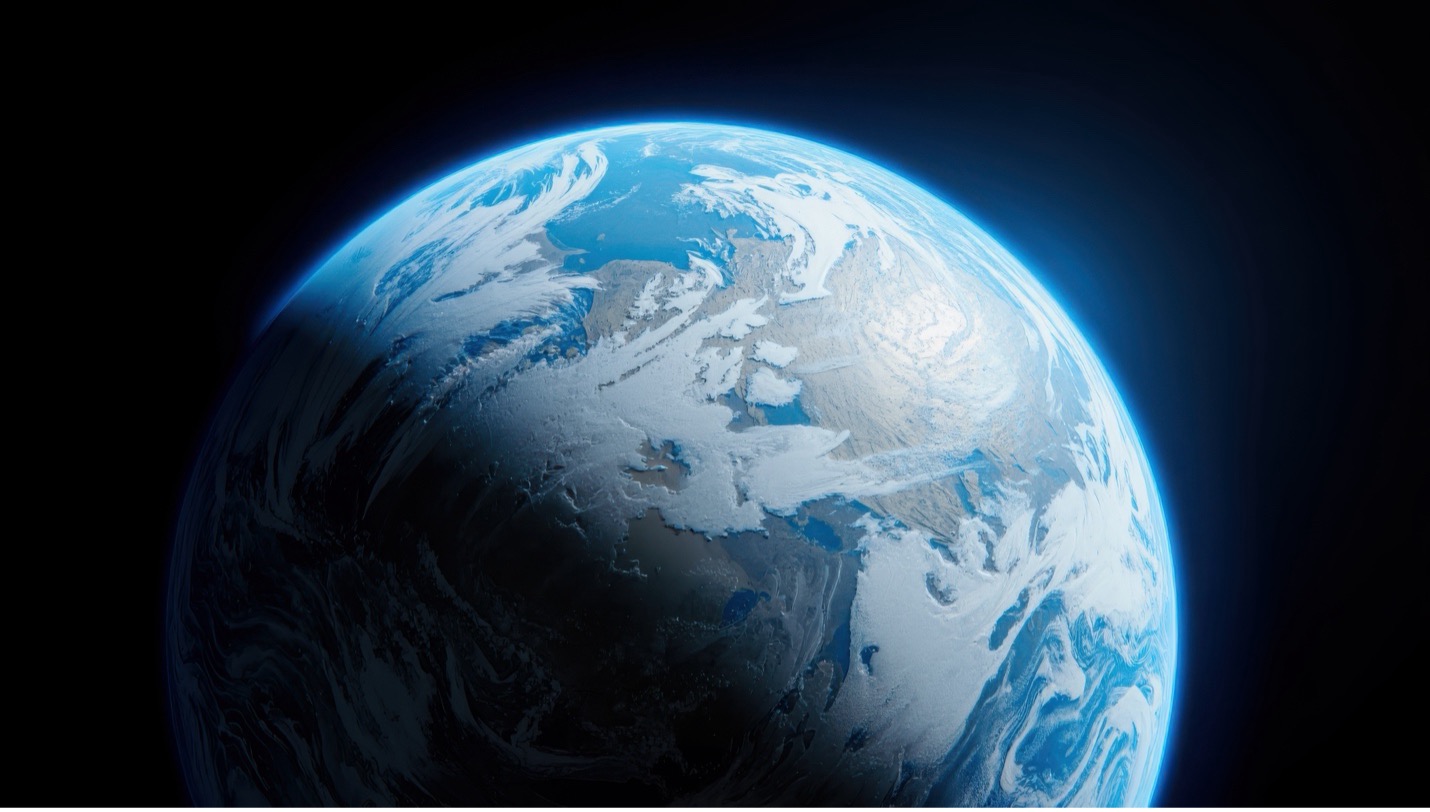
Photo credit: Adobe Stock / Picza Booth
Earth has not always rotated at the same speed it does today. Over the roughly 4 billion years that life has existed on the planet, Earth's rotation has gradually slowed, lengthening days and quietly reshaping the oceans.
New research from Purdue University suggests that this planetary slowdown may have played an important role in making Earth's oceans more hospitable for life, increasing the availability of food and oxygen for marine animals and possibly even contributing to the rise of oxygen in the atmosphere.
"Earth's rotation speed has decreased over the ~4 billion-year history of life on our planet," said Ashika Capirala, a PhD candidate in Purdue University's Department of Earth, Atmospheric, and Planetary Sciences (EAPS) and a NASA FINESST Fellow. "We found that this slowing rotation over time could have led to more primary producers in the ocean—strengthening the base of the food web—and more dissolved oxygen for marine animals, which is required for respiration."
The study, which was published in Science Advances, led by Capirala and co-authored by Stephanie Olson, associate professor in EAPS at Purdue, links a fundamental physical property of the planet to biological and chemical conditions essential for life. The findings help explain how ancient oceans may have supported animal evolution and offer new clues for identifying habitable worlds beyond Earth.
Oceans dominate Earth's surface and have hosted many of the most important evolutionary events in the planet's history. "Oceans provide the largest available habitat on our planet's surface, and several major evolutionary events occurred in the ocean, such as the rise of the first animals," Capirala said.
For animals to survive and diversify, oceans must supply both food and oxygen. Food is produced at the ocean surface by microscopic organisms that carry out photosynthesis and rely on nutrients like phosphorus and nitrogen. Oxygen, critical for respiration, dissolves from the atmosphere into surface waters and is transported to depth by sinking currents.
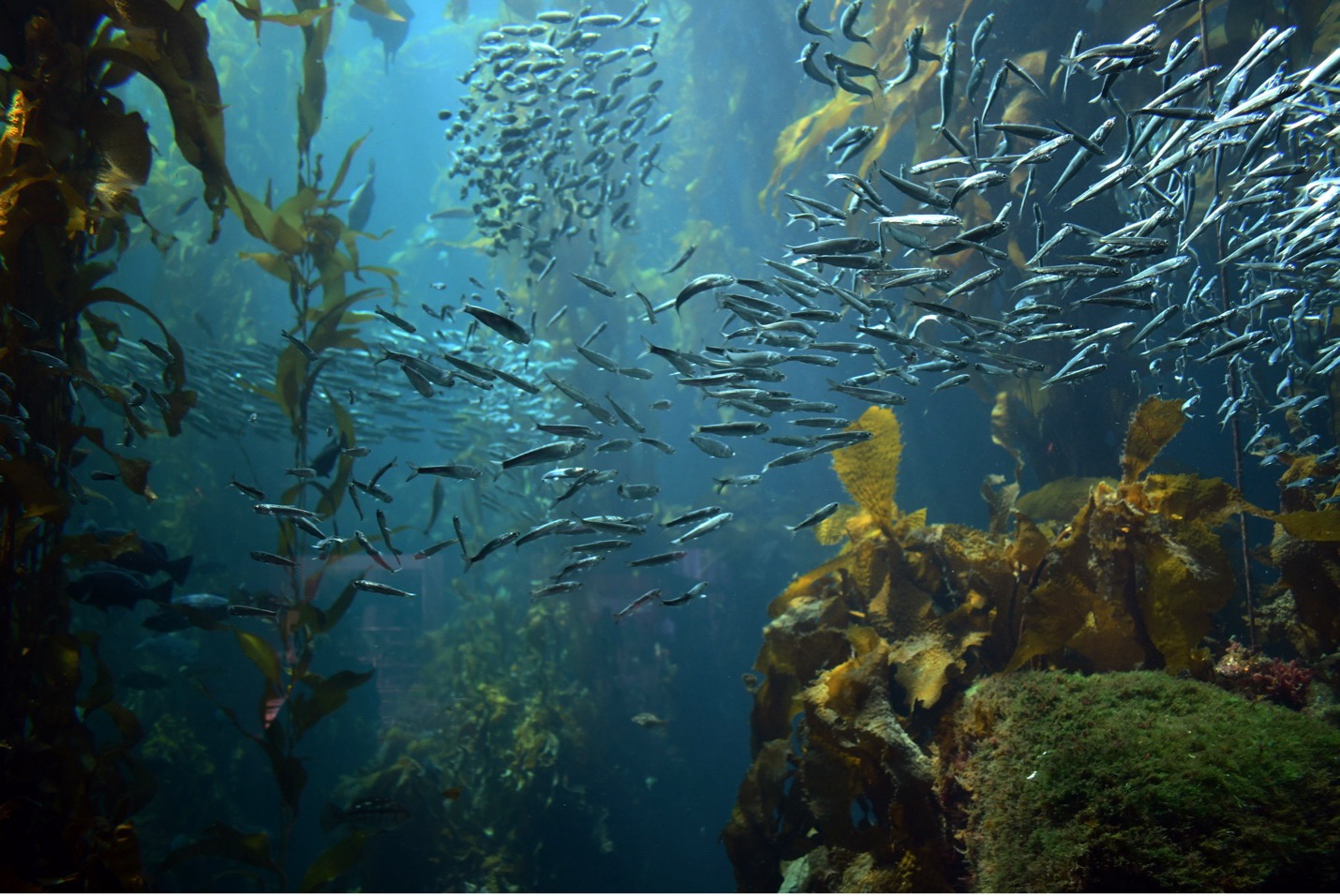
Photo credit: Adobe Stock / Andrew
However, predicting when and where ancient oceans met these requirements is challenging. "Oxygen and nutrient distributions in the ocean are determined by ocean circulation, and it’s hard to know what that was like hundreds of millions of years ago when these evolutionary events occurred," Capirala said. "Secondly, Earth’s atmosphere did not always have 21% oxygen like it does today, meaning dissolved oxygen could only be present at the very surface of the ocean before atmospheric levels increased."
These unknowns led the researchers to examine a basic physical driver of circulation that has changed over Earth's history: planetary rotation. Rotation controls the Coriolis effect, which shapes how water and air move across the planet.
"Rotation helps determine the direction and strength of circulation in the ocean and atmosphere because it sets the Coriolis force," Capirala said. "Earth's rotation has gradually slowed down over billions of years and once could have spun almost 4x as fast as it does today."
Because ocean circulation plays such a central role in transporting nutrients and oxygen, the team asked whether changes in rotation alone could have altered the ocean's ability to support life. Given how difficult it is to reconstruct ancient circulation patterns directly, Capirala said focusing on rotation offered a new way forward. "Understanding rotation's influence could give us clues about how the distribution of oxygen and nutrients has varied over time, affecting life and evolution on Earth and beyond," she said.
To test this idea, Capirala ran simulations using an Earth system model capable of resolving three-dimensional ocean circulation. She refined the study's concept and methodology, conducted the simulations and analysis, and wrote the manuscript. Olson conceived the original study and methods and provided supervision, resources and manuscript editing.
"We ran simulations with an Earth system model that does 3D ocean circulation and tracks the distributions of nutrients and oxygen," Capirala said. "We found that slowing down Earth's rotational speed from double what it is today, down to half, improved the global ocean circulation."
The overturning circulation, often referred to as the ocean's conveyor belt, allows surface waters to sink, carry oxygen downward and later return to the surface enriched with nutrients through upwelling. These deep waters are nutrient-rich, and when they are brought back to the surface, they sustain high productivity and biodiversity.
A stronger circulation had cascading effects throughout the ocean. "As a result, the amount of oxygen increased in the deep ocean, where larger marine animals would live, and so did the supply of nutrients to the surface," she said.
"This means that Earth's oceans could have potentially provided better conditions for ocean oxygenation and animal evolution in the last ~500 million years as rotation slowed down," Capirala said.
When the team explored scenarios with much lower atmospheric oxygen, similar to conditions that dominated much of Earth's history, they uncovered an unexpected result. “When the atmosphere had much less oxygen, about 1 to 10% of present-day levels, we saw that slowing rotation was causing oxygen production to increase. But this oxygen wasn’t staying in the ocean,” Capirala said. "Instead, we found that atmospheric circulation changes led the oxygen to leave the ocean and enter the atmosphere. This was pretty surprising.”
The finding suggests that slower rotation may have helped Earth's atmosphere gradually accumulate oxygen over time, a major step in making the planet habitable for complex life. "Rotation is a long-term background influence on circulation, nutrients, and oxygen," Capirala said, "but potentially one that could have had a big impact on the history of life in the oceans."
The implications extend far beyond Earth. "The Earth-like exoplanets that we plan to target to look for life elsewhere could have a variety of unknown rotation rates," Capirala said. "If a similar phenomenon is occurring on these exoplanets, it could mean that planets rotating slower than Earth are more likely to build up photosynthetic oxygen that we can detect in their atmospheres."
NASA's future Habitable Worlds Observatory is being planned to study the atmospheres of planets with high potential for biosignature gases such as oxygen. Capirala said studies like this one help guide where and how scientists should look.
"Our results have implications for more accurately modeling oceans in deep time and contextualizing evidence of past marine environments from the rock and fossil record," she said. "As for exoplanets, this could help NASA's planned HWO mission pick which planets to target for atmospheric characterization to see if they could host life."
All simulations and analyses were performed using Purdue's high-performance computing resources at the Rosen Center for Advanced Computing. The work was supported by NASA grants from the Habitable Worlds program and the Interdisciplinary Consortia for Astrobiology Research program to Olson, as well as a NASA FINESST award to Capirala.
About the Department of Earth, Atmospheric, and Planetary Sciences at Purdue University
The Department of Earth, Atmospheric, and Planetary Sciences (EAPS) combines four of Purdue’s most interdisciplinary programs: geology and geophysics, environmental sciences, atmospheric sciences, and planetary sciences. EAPS conducts world-class research; educates undergraduate and graduate students; and provides our college, university, state and country with the information necessary to understand the world and universe around us. Our research is globally recognized; our students are highly valued by graduate schools and employers; and our alumni continue to make significant contributions in academia, industry, and federal and state government.
Written by: David Siple, communications specialist, Department of Earth, Atmospheric, and Planetary Sciences at Purdue University
Contributors: Ashika Capirala, PhD candidate in the Department of Earth, Atmospheric and Planetary Sciences (EAPS)