People
Lead Investigator
Graduate Students
Johnson Ethan
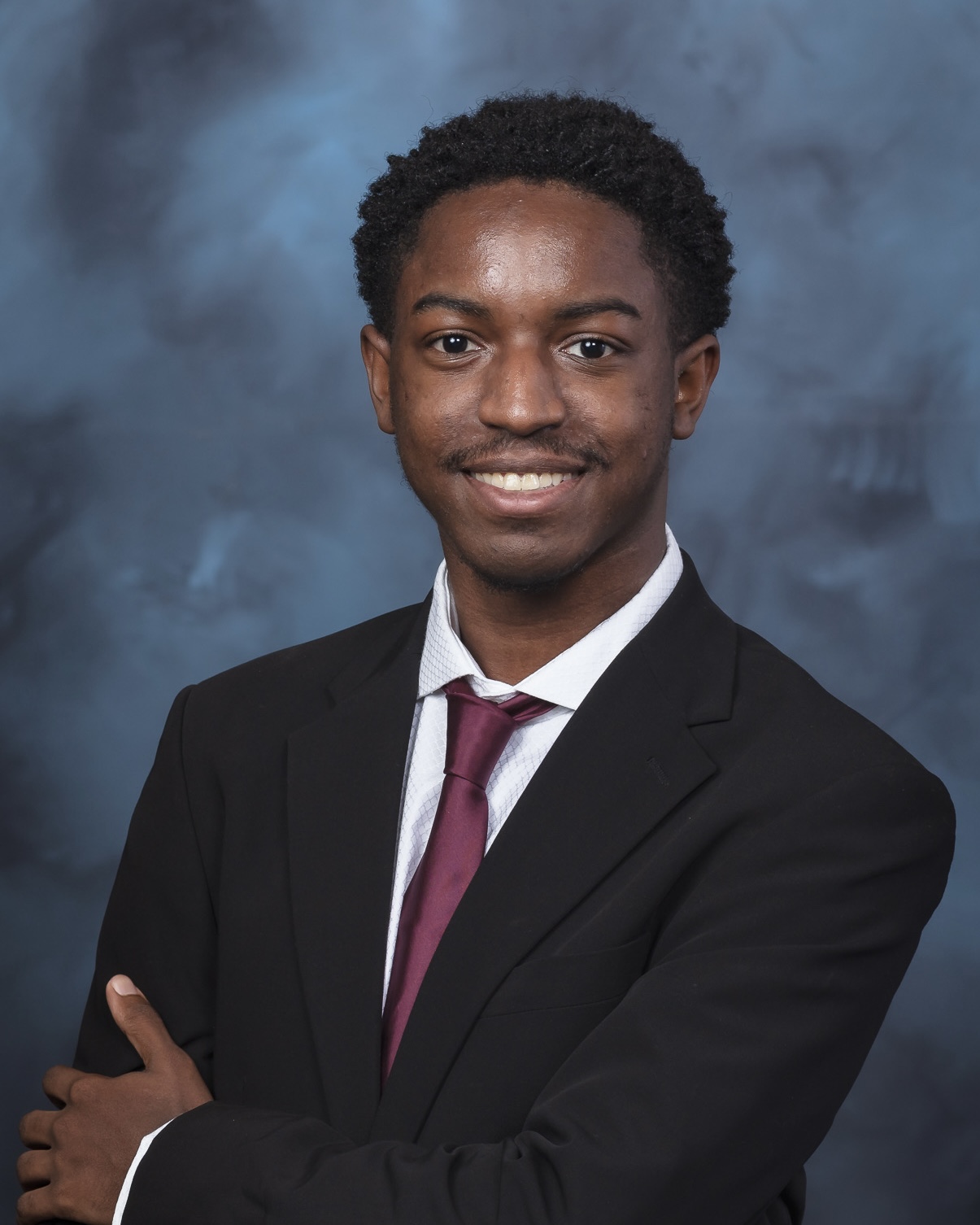
Ethan Johnson is an EAPS PhD student. Ethan uses stable isotopes to investigate biogeochemical and hydrologic dynamics in agricultural drainage tile water. Ethan holds a B.A. in Chemistry magna cum laude from Arizona State University and defended an undergraduate thesis on a novel application of dielectrophoresis in marine geochemistry. Ethan has also done research at Cornell University, Lawrence Livermore National Laboratory, and Oak Ridge National Laboratory and maintains continued collaboration with the latter. Ethan is passionate about global environmental policy and wishes to pursue a career in academia to further study this topic. In his free time, Ethan enjoys traveling, learning languages, studying linguistics, listening to music, hiking, and driving. Ethan is the 2025-27 UCAR Next Generation Policy Fellow and is also the recipient of a GEM Fellowship
Graduate student (PhD)
Email Ethan Johnson is an EAPS PhD student. Ethan uses stable isotopes to investigate biogeochemical and hydrologic dynamics in agricultural drainage tile water. Ethan holds a B.A. in Chemistry magna cum laude from Arizona State University and defended an undergraduate thesis on a novel application of dielectrophoresis in marine geochemistry. Ethan has also done research at Cornell University, Lawrence Livermore National Laboratory, and Oak Ridge National Laboratory and maintains continued collaboration with the latter. Ethan is passionate about global environmental policy and wishes to pursue a career in academia to further study this topic. In his free time, Ethan enjoys traveling, learning languages, studying linguistics, listening to music, hiking, and driving. Ethan is the 2025-27 UCAR Next Generation Policy Fellow and is also the recipient of a GEM Fellowship
Romero Carol
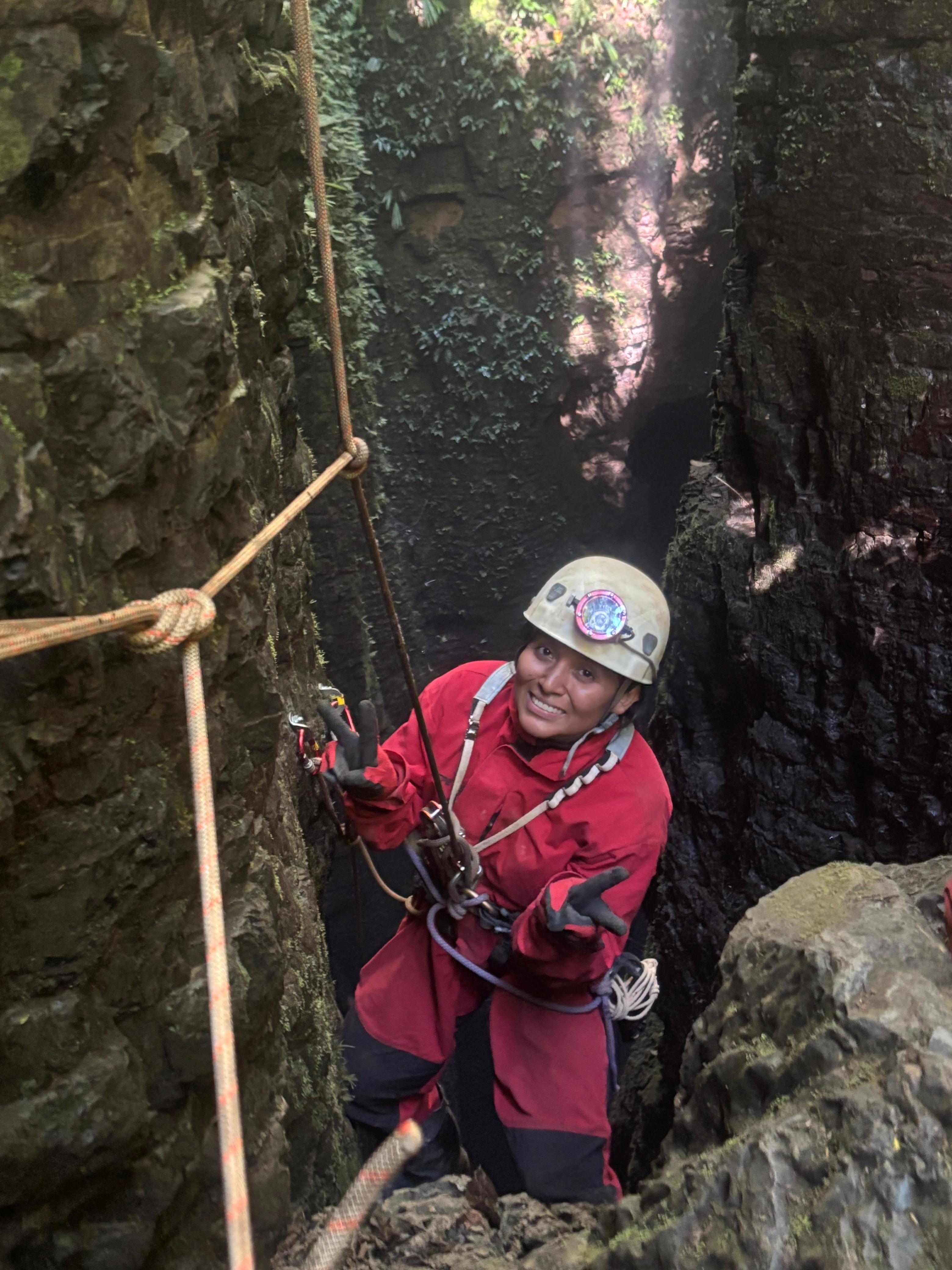
Carol Romero is a PhD student from Peru studying stable isotopes in rainwater to better understand large-scale atmospheric circulation and local processes, including land-sea breezes and orographic effects on precipitation. Beyond my academic work, I enjoy hiking and caving.
Graduate student (PhD)
Email Carol Romero is a PhD student from Peru studying stable isotopes in rainwater to better understand large-scale atmospheric circulation and local processes, including land-sea breezes and orographic effects on precipitation. Beyond my academic work, I enjoy hiking and caving.
Undergraduates
Glody Carolyn
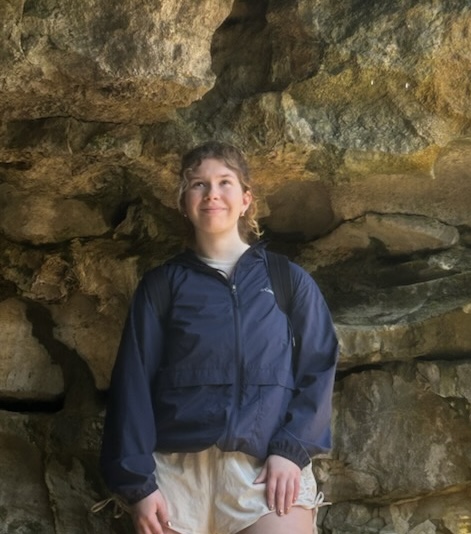
I'm a current undergraduate that is a senior in environmental geoscience. My research consists of analyzing a range of water sources: soil water, groundwater, precipitation, and streams. Using stable isotopes such as oxygen and hydrogen, I analyze water flow patterns and investigate seasonal and annual hydrologic processes. Outside of the lab, I love competitive bowling and spending time with friends and peers!
Undergraduate
Email I'm a current undergraduate that is a senior in environmental geoscience. My research consists of analyzing a range of water sources: soil water, groundwater, precipitation, and streams. Using stable isotopes such as oxygen and hydrogen, I analyze water flow patterns and investigate seasonal and annual hydrologic processes. Outside of the lab, I love competitive bowling and spending time with friends and peers!
DeHaan Sara
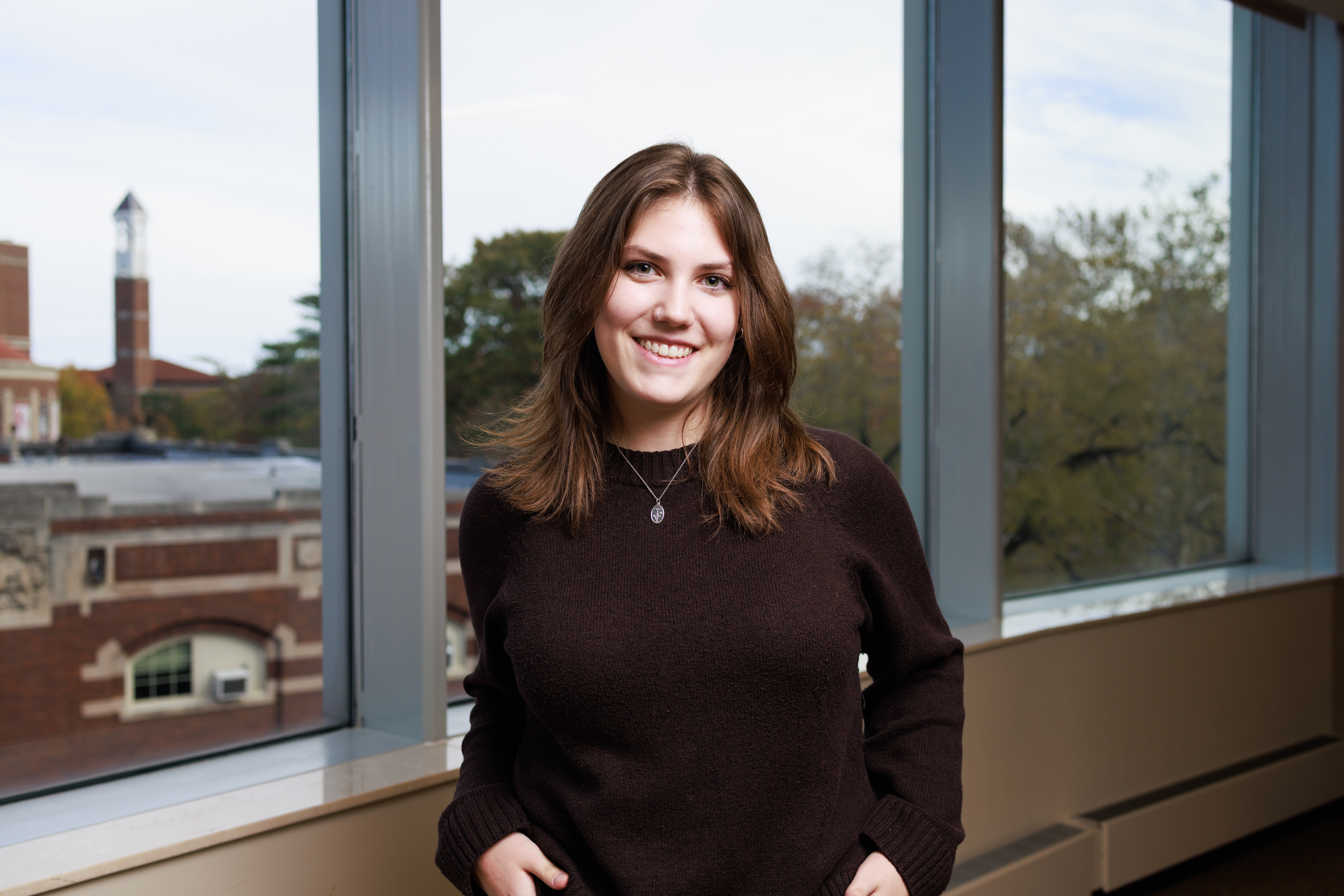
I am studying Environmental Geoscience with minors in anthropology, environmental engineering, and natural resources and environmental science. I am hoping to go onto a master's degree in hydrology to gain a more in-depth understanding of water's significance and impact in our society. Beyond academics, I am heavily involved in College of Science outreach, serving as a team lead for Science Ambassadors, committee head in the Science Student Council, and mentor within the Women in Science Program. I've always felt a strong pull towards the environment and understanding Earth's ongoing processes. Working in this lab since August 2025, I have been able to develop strong technical and collaborative skills, helping with multiple projects through in-lab sample preparation, post-processing, and data analysis.
Undergraduate
Email I am studying Environmental Geoscience with minors in anthropology, environmental engineering, and natural resources and environmental science. I am hoping to go onto a master's degree in hydrology to gain a more in-depth understanding of water's significance and impact in our society. Beyond academics, I am heavily involved in College of Science outreach, serving as a team lead for Science Ambassadors, committee head in the Science Student Council, and mentor within the Women in Science Program. I've always felt a strong pull towards the environment and understanding Earth's ongoing processes. Working in this lab since August 2025, I have been able to develop strong technical and collaborative skills, helping with multiple projects through in-lab sample preparation, post-processing, and data analysis.
Hitchins Amber
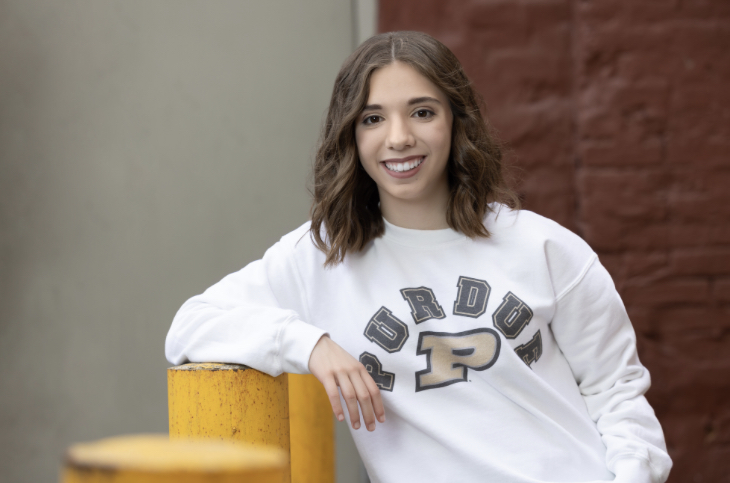
I'm majoring in Environmental Geoscience with a minor in Environmental and Ecological Engineering. I've been working in the lab since August 2024, and my project focuses on understanding how stable isotopes in sequential rainwater samples can give indications of storm event atmospheric processes. Outside Dr. Welp's lab, I've been a Purdue ISF DUIRI intern with Dr. Hoskins in FNR working on research regarding methods for PFAS ecotoxicology studies on largemouth bass larvae. This summer, I'll be a DOE SULI intern at Oak Ridge National Lab working with Dr. Brooks evaluating the performance of different materials to remove mercury from solution to improve water quality. I hope to pursue a PhD in the environmental field understanding the fate and transport of emerging contaminants and ultimately have a research career in which I can help communities which have high levels of contamination.
Undergraduate
Email I'm majoring in Environmental Geoscience with a minor in Environmental and Ecological Engineering. I've been working in the lab since August 2024, and my project focuses on understanding how stable isotopes in sequential rainwater samples can give indications of storm event atmospheric processes. Outside Dr. Welp's lab, I've been a Purdue ISF DUIRI intern with Dr. Hoskins in FNR working on research regarding methods for PFAS ecotoxicology studies on largemouth bass larvae. This summer, I'll be a DOE SULI intern at Oak Ridge National Lab working with Dr. Brooks evaluating the performance of different materials to remove mercury from solution to improve water quality. I hope to pursue a PhD in the environmental field understanding the fate and transport of emerging contaminants and ultimately have a research career in which I can help communities which have high levels of contamination.
Alumni
Alexandra Meyer
Ali Meyer is an EAPS Ph.D. candidate and the recipient of a NSF Graduate Research Fellowship and a Purdue Doctoral Fellowship. Her research will focuses on water isotope applications in meteorology and evaporation from the Great Lakes. She studied chemistry and biology at the University of Saint Francis in Fort Wayne, Indiana. Ali was involved in many research projects and summer programs during her undergraduate career, including classes in nuclear chemistry at Brookhaven National Lab and a REU in bioenergy at the University of Nebraska Lincoln. Her passion for the environment and field-work led her to the Welp lab, where she hopes to obtain her Ph.D. In her spare time, Ali enjoys knitting and reading.
Ph.D. in EAPS, 2025
Email Ali Meyer is an EAPS Ph.D. candidate and the recipient of a NSF Graduate Research Fellowship and a Purdue Doctoral Fellowship. Her research will focuses on water isotope applications in meteorology and evaporation from the Great Lakes. She studied chemistry and biology at the University of Saint Francis in Fort Wayne, Indiana. Ali was involved in many research projects and summer programs during her undergraduate career, including classes in nuclear chemistry at Brookhaven National Lab and a REU in bioenergy at the University of Nebraska Lincoln. Her passion for the environment and field-work led her to the Welp lab, where she hopes to obtain her Ph.D. In her spare time, Ali enjoys knitting and reading.
Youmi Oh
Youmi Oh is an EAPS Ph.D. candidate and the recipient of a NASA Earth and Space Science Fellowship, a Henry Silver Graduate Scholarship, a Ross Graduate fellowship, and a PCCRC graduate student incentive award. Youmi's research focuses on the carbon cycle. She uses stable carbon isotopes in tree leaves to study how plants respond to environmental change, including drought stress. She is also modeling methane oxidation in terrestrial ecosystems in collaboration with Dr. Qianlai Zhuang also in EAPS. Youmi comes to the lab with a MS in Atmospheric and Ocean Sciences from Princeton University where she created a model of methane consumption in Arctic mineral soils. Before that, she earned her BS in Environmental Engineering and Biology from the Ewha Woman's University in South Korea.
Ph.D. in EAPS, 2020
Email Youmi Oh is an EAPS Ph.D. candidate and the recipient of a NASA Earth and Space Science Fellowship, a Henry Silver Graduate Scholarship, a Ross Graduate fellowship, and a PCCRC graduate student incentive award. Youmi's research focuses on the carbon cycle. She uses stable carbon isotopes in tree leaves to study how plants respond to environmental change, including drought stress. She is also modeling methane oxidation in terrestrial ecosystems in collaboration with Dr. Qianlai Zhuang also in EAPS. Youmi comes to the lab with a MS in Atmospheric and Ocean Sciences from Princeton University where she created a model of methane consumption in Arctic mineral soils. Before that, she earned her BS in Environmental Engineering and Biology from the Ewha Woman's University in South Korea.

Olivia Salmon
Olivia Salmon completed her Ph.D. in chemistry co-advised by Dr. Paul Shepson and Dr. Welp. She investigated atmospheric chemistry and water vapor stable isotopes above urban areas of Indianapolis and Washington D.C.. She flew the Welp lab water vapor isotope analyzer (LGR) doing vertical profiles up- and downwind of Indianapolis and Washington, D.C. during winter months. Olivia has a BS in Chemistry from Marquette University. She is currently an Air Policy Analyst at the Wisconsin Department of Natural Resources.
Ph.D. in Chemistry, 2018
Email Olivia Salmon completed her Ph.D. in chemistry co-advised by Dr. Paul Shepson and Dr. Welp. She investigated atmospheric chemistry and water vapor stable isotopes above urban areas of Indianapolis and Washington D.C.. She flew the Welp lab water vapor isotope analyzer (LGR) doing vertical profiles up- and downwind of Indianapolis and Washington, D.C. during winter months. Olivia has a BS in Chemistry from Marquette University. She is currently an Air Policy Analyst at the Wisconsin Department of Natural Resources.
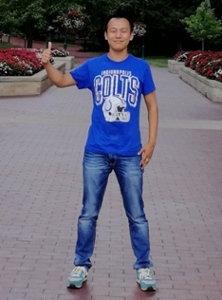
He Zhonghua
Zhonghua He was a visiting student supported by the PhD scholarship from University of Chinese Academy of Sciences (UCAS) Joint PhD Program. He is a third year PhD student of the Institute of remote sensing and digital earth, Chinese Academy of Sciences, Beijing, China. He studied remote sensing science and technology in Wuhan University, Wuhan, China. He focuses on remote sensing applications to global carbon cycle research. He used data mining method doing global carbon cycle researches of biosphere-atmosphere interaction and extreme events detection. He studies terrestrial carbon flux variations with global climate change.
Visiting Ph.D. student (2018-2019)
Zhonghua He was a visiting student supported by the PhD scholarship from University of Chinese Academy of Sciences (UCAS) Joint PhD Program. He is a third year PhD student of the Institute of remote sensing and digital earth, Chinese Academy of Sciences, Beijing, China. He studied remote sensing science and technology in Wuhan University, Wuhan, China. He focuses on remote sensing applications to global carbon cycle research. He used data mining method doing global carbon cycle researches of biosphere-atmosphere interaction and extreme events detection. He studies terrestrial carbon flux variations with global climate change.
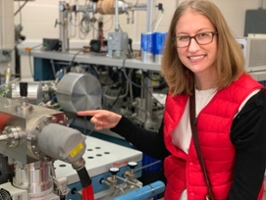
Elizabeth Olson
Elizabeth Olson is an EAPS NEXUS Institute Postdoctoral researcher. Funded by the NEXUS collaboration between Purdue University and the Universidad Nacional de San Agustin (UNSA). Her research focuses on determining the sources of air and rain pollutants using geochemical and isotopic tracers in the city of Arequipa, Peru. Elizabeth is an undergraduate alumnus of the University of Florida Geology and Anthropology departments. While at the University of Maine Climate Change Institute she studied Holocene ENSO events on the North coast of Peru. Elizabeth received her PhD from Northern Illinois University in 2018 where she researched Holocene water-availability in the Atacama Desert using tree-ring isotopes. As a doctoral student Elizabeth received multiple awards including the Geologic Society of America�s Quaternary Division Morisawa Award and the NSF Funded Inter-university Training for Continental-scale Ecology Research in Residence Grant.
Postdoc
Email Elizabeth Olson is an EAPS NEXUS Institute Postdoctoral researcher. Funded by the NEXUS collaboration between Purdue University and the Universidad Nacional de San Agustin (UNSA). Her research focuses on determining the sources of air and rain pollutants using geochemical and isotopic tracers in the city of Arequipa, Peru. Elizabeth is an undergraduate alumnus of the University of Florida Geology and Anthropology departments. While at the University of Maine Climate Change Institute she studied Holocene ENSO events on the North coast of Peru. Elizabeth received her PhD from Northern Illinois University in 2018 where she researched Holocene water-availability in the Atacama Desert using tree-ring isotopes. As a doctoral student Elizabeth received multiple awards including the Geologic Society of America�s Quaternary Division Morisawa Award and the NSF Funded Inter-university Training for Continental-scale Ecology Research in Residence Grant.

Spencer Willem
Spencer Willem is a M.S. candidate, and his research focuses on nutrient loading and residence times in tributaries of the Wabash River. Spencer completed his B.S. at the University of Evansville and majored in Environmental Science, Biology, and chemistry. His undergraduate research interests were in environmental microbiology and included an internship at the Smithsonian Environmental Research Center studying the genetics of anaerobic bacteria that produce the toxic organometallic compound methylmercury. His interest in hydrology and geochemical cycling led him to pursue a graduate degree in Dr. Welp's lab. Spencer's hobbies include photography, travelling, and camping.
MS in EAPS, 2021
Email Spencer Willem is a M.S. candidate, and his research focuses on nutrient loading and residence times in tributaries of the Wabash River. Spencer completed his B.S. at the University of Evansville and majored in Environmental Science, Biology, and chemistry. His undergraduate research interests were in environmental microbiology and included an internship at the Smithsonian Environmental Research Center studying the genetics of anaerobic bacteria that produce the toxic organometallic compound methylmercury. His interest in hydrology and geochemical cycling led him to pursue a graduate degree in Dr. Welp's lab. Spencer's hobbies include photography, travelling, and camping.
Odiney Maria Alvarez-Campos
Dr. Alvarez-Campos is working on two projects supported by the Arequipa Nexus Institute. The first is studying groundwater recharge in the Characato District of Arequipa, Peru using aqueous geochemistry and stable isotopes. Consistent groundwater resources support a significant amount of urban agriculture and provide an important drinking water supply in the city of Arequipa. The second project is investigating the causes of salinization in major desert irrigation agricultural systems. Understanding the causes of salinization is important for mitigating degradation in soil health and contamination of freshwater resources near the irrigation seepage discharge region.
Postdoc
Email Dr. Alvarez-Campos is working on two projects supported by the Arequipa Nexus Institute. The first is studying groundwater recharge in the Characato District of Arequipa, Peru using aqueous geochemistry and stable isotopes. Consistent groundwater resources support a significant amount of urban agriculture and provide an important drinking water supply in the city of Arequipa. The second project is investigating the causes of salinization in major desert irrigation agricultural systems. Understanding the causes of salinization is important for mitigating degradation in soil health and contamination of freshwater resources near the irrigation seepage discharge region.
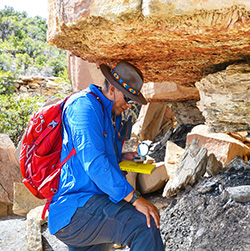
Slick Derrick
Slick has collected precipitation and plant stem waters for stable water isotope analysis across the Black Mesa watershed in his home, Navajo Nation, to better understand shallow groundwater recharge. He is combining this with landscape geological analysis to relate folding and continuity of geologic deposits to sub-surface water flow. This will improve understanding of ecohydrology, surface pond water balance, and alluvial aquifer recharge important for livestock grazing on the Navajo Nation. Slick is the receipent of an NSF Graduate Research Fellowship and I co-advised by Dr. Ridgway and Dr. Welp.
MS in EAPS, 2023
Slick has collected precipitation and plant stem waters for stable water isotope analysis across the Black Mesa watershed in his home, Navajo Nation, to better understand shallow groundwater recharge. He is combining this with landscape geological analysis to relate folding and continuity of geologic deposits to sub-surface water flow. This will improve understanding of ecohydrology, surface pond water balance, and alluvial aquifer recharge important for livestock grazing on the Navajo Nation. Slick is the receipent of an NSF Graduate Research Fellowship and I co-advised by Dr. Ridgway and Dr. Welp.
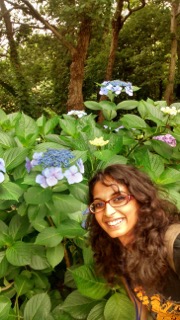
Apurupa Gorthi
Apurupa Gorthi is a Research Analyst at the Council on Energy, Environment and Water (CEEW), a policy research think tank. She is currently developing policy options for India's upcoming HFC transition as part of the Kigali Amendment under the Montreal Protocol. Her research interests lie broadly in climate change mitigation policy and the food-water-energy nexus. Prior to joining The Council, Apurupa served as a research intern and project lead for the Food and Water Security team in the Think Tanks and Civil Societies Program at the University of Pennsylvania. During her time there, Apurupa investigated the evolution of food and water security in academic literature while also researching the role of think tanks in policy research and governmental action. Apurupa holds an MS from EAPS through the Ecological Sciences and Engineering interdisciplinary program from Purdue University. The concentration of her master�s thesis was the water use efficiency of mid-western US agricultural crops including soybean, Miscanthus and switchgrass. She holds an undergraduate degree in Chemical Engineering wherein her thesis focused on developing a non-chemical method for treating industrial wastewater. Her interest in climate change action led her to intern at the University of Tokyo wherein she worked on oceanic sequestration of carbon dioxide.
M.S. in ESE, 2017
Apurupa Gorthi is a Research Analyst at the Council on Energy, Environment and Water (CEEW), a policy research think tank. She is currently developing policy options for India's upcoming HFC transition as part of the Kigali Amendment under the Montreal Protocol. Her research interests lie broadly in climate change mitigation policy and the food-water-energy nexus. Prior to joining The Council, Apurupa served as a research intern and project lead for the Food and Water Security team in the Think Tanks and Civil Societies Program at the University of Pennsylvania. During her time there, Apurupa investigated the evolution of food and water security in academic literature while also researching the role of think tanks in policy research and governmental action. Apurupa holds an MS from EAPS through the Ecological Sciences and Engineering interdisciplinary program from Purdue University. The concentration of her master�s thesis was the water use efficiency of mid-western US agricultural crops including soybean, Miscanthus and switchgrass. She holds an undergraduate degree in Chemical Engineering wherein her thesis focused on developing a non-chemical method for treating industrial wastewater. Her interest in climate change action led her to intern at the University of Tokyo wherein she worked on oceanic sequestration of carbon dioxide.
Foeppel Jared
Jared Foeppel is a BS major in Environmental Geoscience at Purdue University. He has participated in the Welp lab since spring 2018. He has analyzed water isotope compositions of local precipitation and streams from the Wabash River sampling blitz. Most recently he has been analyzing carbon isotopes through the separation of sugars and startches. He is excited to present his research at the Fall 2019 Undergraduate Research Exposition.
Undergraduate (Spring 2018 - )
Jared Foeppel is a BS major in Environmental Geoscience at Purdue University. He has participated in the Welp lab since spring 2018. He has analyzed water isotope compositions of local precipitation and streams from the Wabash River sampling blitz. Most recently he has been analyzing carbon isotopes through the separation of sugars and startches. He is excited to present his research at the Fall 2019 Undergraduate Research Exposition.
Beck Emma
Emma Beck participated in the Purdue summer SURF program during the summer of 2018 in the Welp lab. She is using statistical methods in R to examine water isotope and nutrient concentrations from the Wabash River sampling blitz. She is a BS major in statistics.
Undergradate (Summer 2018)
Emma Beck participated in the Purdue summer SURF program during the summer of 2018 in the Welp lab. She is using statistical methods in R to examine water isotope and nutrient concentrations from the Wabash River sampling blitz. She is a BS major in statistics.
Logan Eder
Logan Eder graduate with a BS in Chemistry and worked in the Welp lab on method development for achieving 'per meg' precision of 17O-excess values of water using the Los Gatos Research Triple Liquid Water Isotope Analyzer. This is a potential tracer of evaporation influence. She is currently working on a MS in forensics at Ball State University.
Undergraduate (Fall 2016 -Spring 2017 )
Logan Eder graduate with a BS in Chemistry and worked in the Welp lab on method development for achieving 'per meg' precision of 17O-excess values of water using the Los Gatos Research Triple Liquid Water Isotope Analyzer. This is a potential tracer of evaporation influence. She is currently working on a MS in forensics at Ball State University.
Guarav Mittal
Gaurav Mittal volunteered in the Welp lab (2016-2017) while an earning his undergraduate degree in Chemical Engineering. During the summer of 2016, he interned at the EPA in Washington, D.C. He continued his studies earning a MS in Environmental Engineering at Berkeley. He is currently a Water Resource Control Engineer with the San Francisco Bay Regional Water Quality Control Board.
Undergraduate (Spring 2016 - Spring 2017 )
Gaurav Mittal volunteered in the Welp lab (2016-2017) while an earning his undergraduate degree in Chemical Engineering. During the summer of 2016, he interned at the EPA in Washington, D.C. He continued his studies earning a MS in Environmental Engineering at Berkeley. He is currently a Water Resource Control Engineer with the San Francisco Bay Regional Water Quality Control Board.
Brad McGinley
Brad was a BS major in Environmental Geosciences in EAPS who graduated in the Spring of 2016. He did a semester of undergraduate research in the Welp lab analyzing the oxygen and hydrogen isotopes of stream water collected as part of the Wabash Sampling Blitz (http://www.wabashriver.net/wabash-sampling-blitz). He used GIS to look at spatial patterns of the isotopes and correlated variability to land use type and soil drainage class.
Undergraduate (Spring 2016)
Brad was a BS major in Environmental Geosciences in EAPS who graduated in the Spring of 2016. He did a semester of undergraduate research in the Welp lab analyzing the oxygen and hydrogen isotopes of stream water collected as part of the Wabash Sampling Blitz (http://www.wabashriver.net/wabash-sampling-blitz). He used GIS to look at spatial patterns of the isotopes and correlated variability to land use type and soil drainage class.
Hu Yongbo
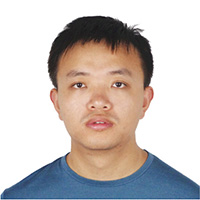
Mr. Hu is a Ph.D. student at the Nanjing University of Information Science and Technology, China. He is working with Dr. Welp on quantifying the isotopic signature of evaporation from Lake Taihu in China using a new modeling framework developed with collaborators at Dartmouth. Stable isotopes of atmospheric vapor and precipitation may help us to understand the role that large lakes play in the regional hydroclimatology
Visiting Ph.D. student (2019-2020)
Mr. Hu is a Ph.D. student at the Nanjing University of Information Science and Technology, China. He is working with Dr. Welp on quantifying the isotopic signature of evaporation from Lake Taihu in China using a new modeling framework developed with collaborators at Dartmouth. Stable isotopes of atmospheric vapor and precipitation may help us to understand the role that large lakes play in the regional hydroclimatology
Magara-Gomez Kento
Dr. Magara-Gomez worked on understanding sources of air pollution in Arequipa, Peru as part of the Arequipa Nexus Institute work. He generated an emissions inventory for NOx and SO2 and led an analysis of black and brown carbon on aerosol filter samples from the region. In addition, he investigated potential PM2.5 and PM10 sampling biases using standard equipment at high elevation. Current position: Associate Professor, Environmental Engineering Department, Universidad Pontificia Bolivariana - Seccional Bucaramanga, Santander, Columbia
Postdoc
Dr. Magara-Gomez worked on understanding sources of air pollution in Arequipa, Peru as part of the Arequipa Nexus Institute work. He generated an emissions inventory for NOx and SO2 and led an analysis of black and brown carbon on aerosol filter samples from the region. In addition, he investigated potential PM2.5 and PM10 sampling biases using standard equipment at high elevation. Current position: Associate Professor, Environmental Engineering Department, Universidad Pontificia Bolivariana - Seccional Bucaramanga, Santander, Columbia
Abril-Gutierrez Juan Pablo
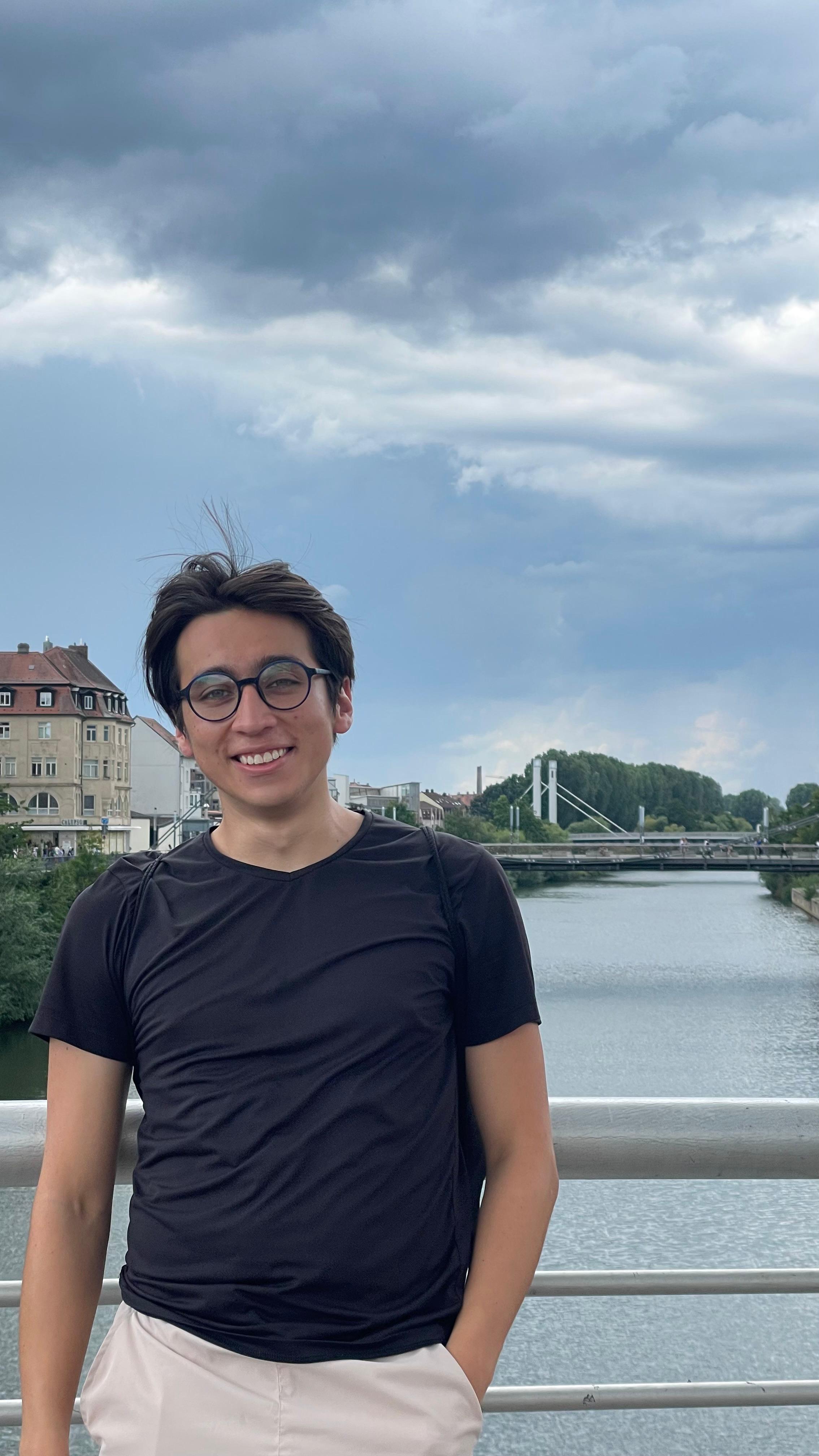
Juan Pablo Abril-Gutierrez served as a UREP-C visiting scholar at Purdue University. There, he collaborated closely with a team to model soil moisture variability, using stable isotopes to monitor tree-soil-water interactions and search for signs of hydraulic redistribution. He earned a degree in Agricultural Engineering from the Universidad Nacional de Colombia. He is passionate about tracking and understanding water across the entire hydrological cycle, from deep groundwater formations to complex atmospheric processes. As an undergraduate, he took on significant leadership roles in Colombia, engaging heavily in research projects and co-founding the SIAMS group. Outside of his academic pursuits, Juan Pablo loves running, trekking through mountainous landscapes, and enjoying some gossip time. He is currently an incoming graduate student in the GroundwatCH Erasmus Mundus program in Portugal, Netherlands, and Germany.
Undergraduate
Email Juan Pablo Abril-Gutierrez served as a UREP-C visiting scholar at Purdue University. There, he collaborated closely with a team to model soil moisture variability, using stable isotopes to monitor tree-soil-water interactions and search for signs of hydraulic redistribution. He earned a degree in Agricultural Engineering from the Universidad Nacional de Colombia. He is passionate about tracking and understanding water across the entire hydrological cycle, from deep groundwater formations to complex atmospheric processes. As an undergraduate, he took on significant leadership roles in Colombia, engaging heavily in research projects and co-founding the SIAMS group. Outside of his academic pursuits, Juan Pablo loves running, trekking through mountainous landscapes, and enjoying some gossip time. He is currently an incoming graduate student in the GroundwatCH Erasmus Mundus program in Portugal, Netherlands, and Germany.
Staff
Postdoctoral Researchers
Sheena Sunil Nimya
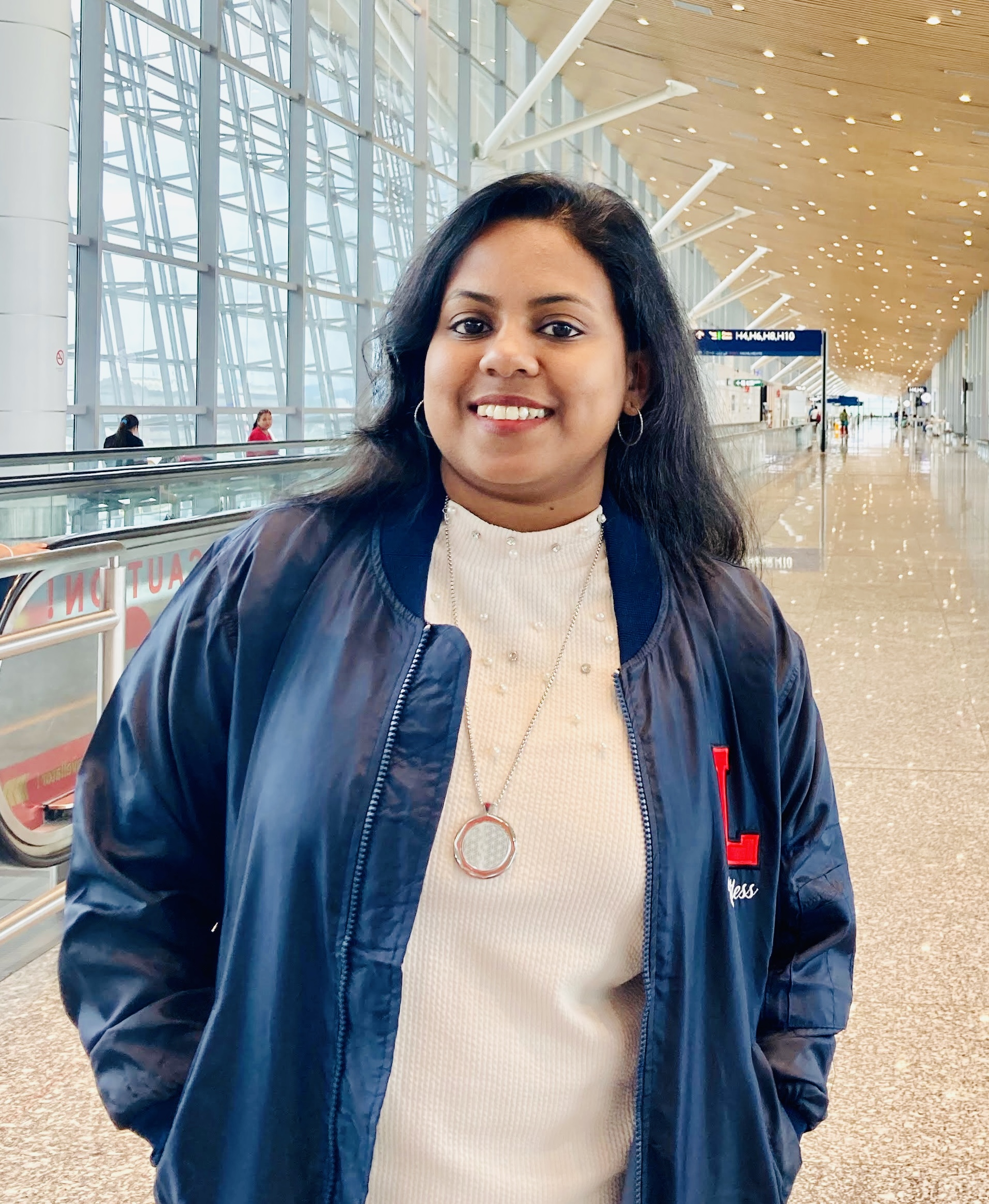
I am a postdoctoral research associate at Purdue, where I investigate vertical moisture exchange in clouds using a combination of stable water isotopes and in situ observations. My work focuses on using the isotopic composition of atmospheric water vapor to quantify entrainment and drizzle processes in marine stratocumulus clouds, providing new constraints on sub-grid-scale processes in weather and climate models. I earned my Ph.D in Atmospheric and Space Sciences from the Indian Institute of Tropical Meteorology. I am broadly interested in bridging detailed process studies and model development, with the goal of improving the representation of clouds and moisture transport in regional and global prediction systems.
Postdoc (2024 - present)
Email I am a postdoctoral research associate at Purdue, where I investigate vertical moisture exchange in clouds using a combination of stable water isotopes and in situ observations. My work focuses on using the isotopic composition of atmospheric water vapor to quantify entrainment and drizzle processes in marine stratocumulus clouds, providing new constraints on sub-grid-scale processes in weather and climate models. I earned my Ph.D in Atmospheric and Space Sciences from the Indian Institute of Tropical Meteorology. I am broadly interested in bridging detailed process studies and model development, with the goal of improving the representation of clouds and moisture transport in regional and global prediction systems.
Chandel Aneesh
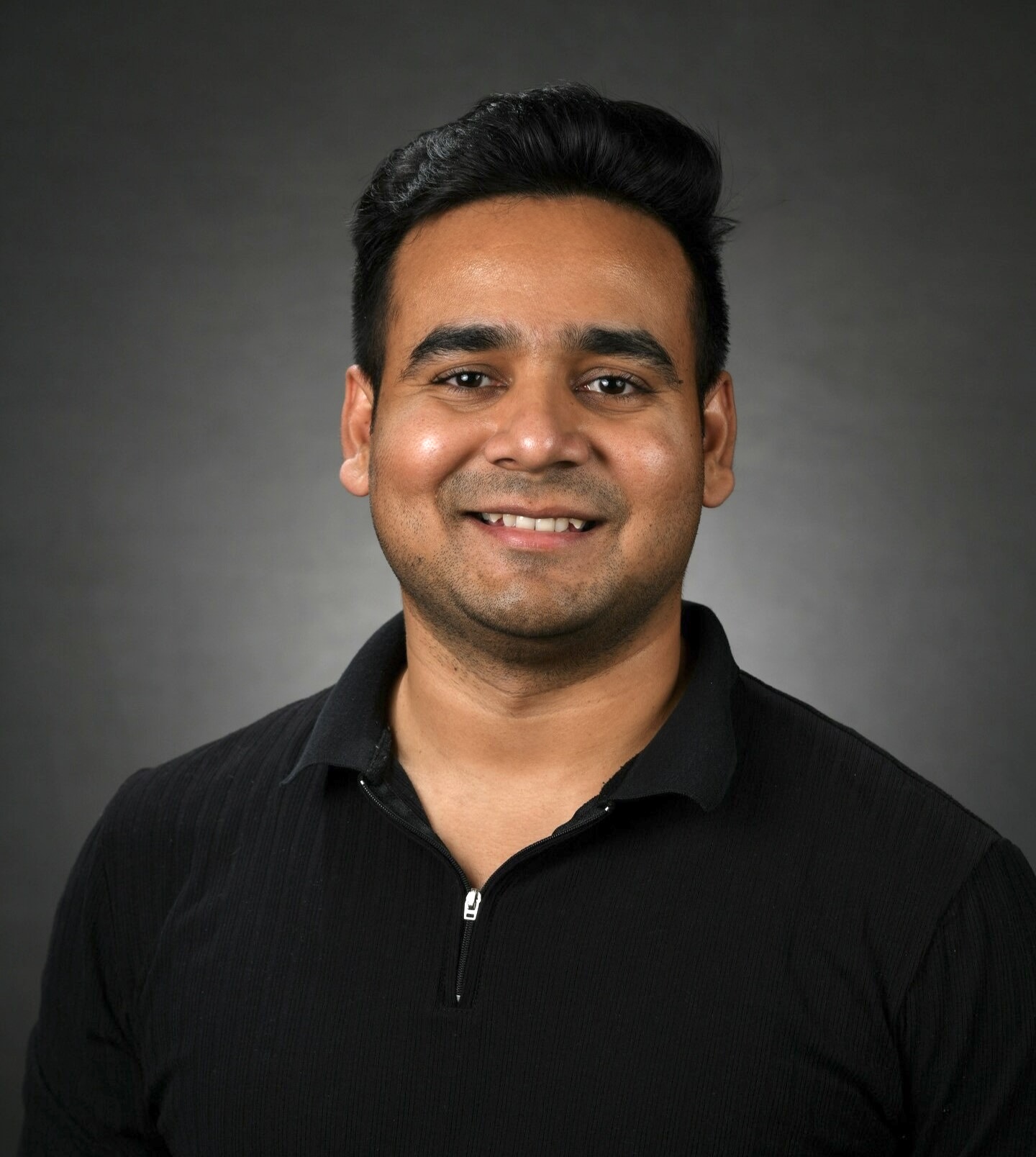
Aneesh Chandel is an ecosystem modeler specializing in the intersection of ecosystem water-carbon dynamics. By leveraging machine learning, statistical methods, biogeochemical models and observed data, he optimizes model parameters to uncover the mechanisms driving ecosystem functions. He earned his Ph.D. in Soil and Crop Sciences from Cornell University. As a postdoc, in collaboration with Carnegie Science and Purdue University, he will investigate and model root-mediated water movement in the soil
Postdoc (Carnegie)
Email Aneesh Chandel is an ecosystem modeler specializing in the intersection of ecosystem water-carbon dynamics. By leveraging machine learning, statistical methods, biogeochemical models and observed data, he optimizes model parameters to uncover the mechanisms driving ecosystem functions. He earned his Ph.D. in Soil and Crop Sciences from Cornell University. As a postdoc, in collaboration with Carnegie Science and Purdue University, he will investigate and model root-mediated water movement in the soil